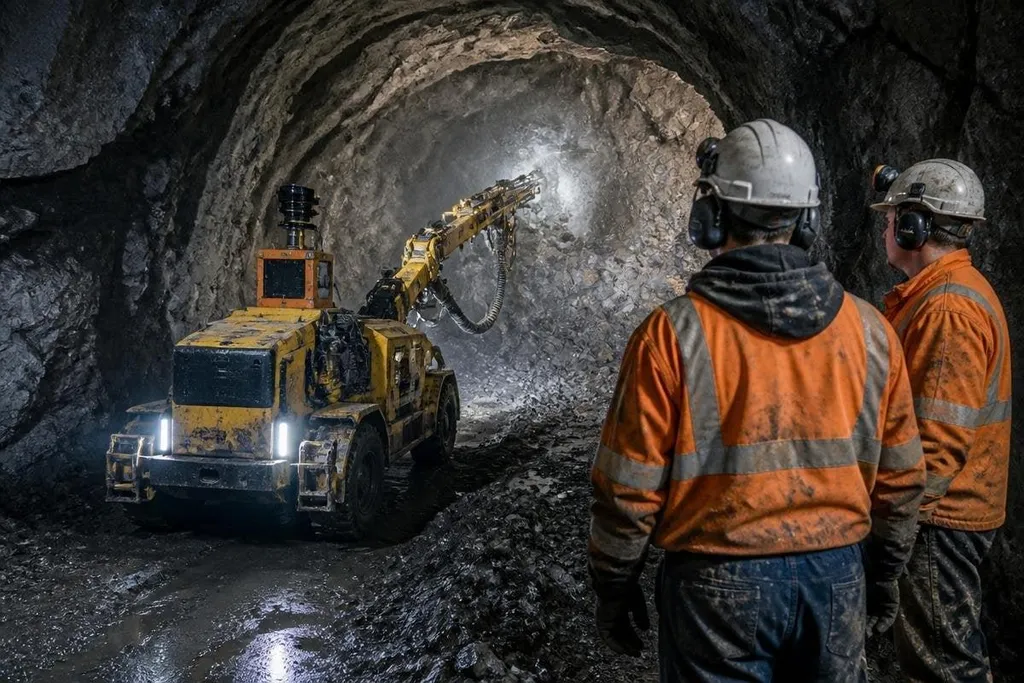
Mining robots are moving into jobs that expose people to falling rock, dust, heat, water, and unstable ground. Their value comes from doing a narrow task in a place where sending a person may carry more risk than sending a machine.
That makes mining a practical test for robotics. A machine has to sense its surroundings, keep working when conditions change, and give useful data to people far from the work area.
The jobs robots can take on
Mining robots can inspect tunnels, map open pits, carry tools, remove loose material, and collect readings from places that are hard to reach.
Some systems work on their own for part of a task, while others use teleoperation, meaning a person controls the machine from a safer location.
The task matters more than the label. A robot does not need human-like movement to help a mine. A tracked vehicle with a camera and a sensor pack may do more useful work than a machine built to copy a worker’s shape.
Inspection is a clear example. A robot can enter an area after a blast and send back video, gas readings, or a map before a worker goes in. That information can help a site decide where people can work and where the ground needs more checks.
Why mining is hard for machines
Mines are rough places for sensors and motors. Dust can cover cameras. Water can damage electronics. Loose rock can block a route, while poor radio links can cut off a remotely controlled vehicle.
One that works on a clean test floor may fail in a tunnel with uneven ground and changing light. The robot needs enough traction to cross broken surfaces, a body that can handle dust and water, and software that can stop safely when its sensors lose sight of the route.
Power also limits the work. A battery-powered robot needs a charging point or a safe way to return. One that spends most of its shift travelling back for power may collect less useful data than a slower robot with longer working time.
These limits explain why mining robots often start with inspection or mapping. Those tasks can produce useful results without asking a machine to replace a full crew or make every decision alone.
Data matters as much as movement
A mining robot earns its place by turning a hard-to-reach area into information that a site team can use. Cameras can show cracks or loose rock. LiDAR, a sensor that measures distance with laser pulses, can build a three-dimensional map. Gas sensors can check the air near a work area.
The data still needs a person who understands the mine. A map does not decide whether a tunnel is safe to enter, and a camera cannot explain every change in the rock. Robots reduce exposure and collect evidence; trained staff still judge what happens next.
A mine operator needs more than a maker’s safety claim. The useful record names the robot, mine, task, date, and result. Mining robotics reporting from Robot24.com can connect those facts to the work done underground, which leads into what remains unproven.
What remains unproven
Mining companies need more than a working demonstration. They need a machine that can run through dust, recover from blocked routes, send data over the site’s network, and fit existing safety rules.
The business case also depends on the task. A robot may make sense when it removes repeated inspections from a dangerous area. It may make less sense when staff must follow it closely, repair it often, or review hours of data for one useful finding.
I’d judge a mining robot by the work it completes without a person entering the hazard zone, not by how human the machine looks.
Before a mine buys a robot
Use this check before a trial:
- Name the task: Set one job with a clear result, such as a map, inspection record, or sample.
- Check the ground: Test slopes, loose rock, water, dust, lighting, and the route back to power.
- Measure the link: Find where radio or network coverage drops, then define what the robot does after losing contact.
- Set the human role: Decide who reviews the data, who can stop the robot, and who handles a recovery.
- Count the full work: Include charging, transport, repairs, software, training, and data review in the trial cost.
A useful trial should end with a work record, not a video. The next question for mining operators is narrow and measurable: can the robot finish one risky task often enough to change how people enter the site?